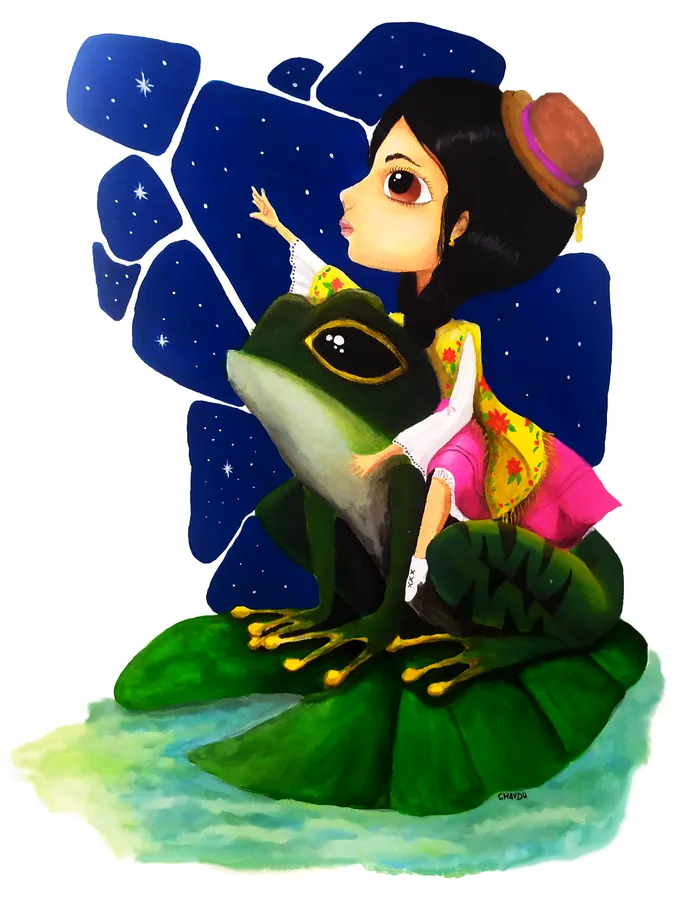
Pandillas de Punoyork
Prints
Reproduced from this painting, made to order.
Added to your cart. Check out
US shipping from $4.99, at checkout.
The original
Sold.
Pandillas de Punoyork
Mi abuela era de Juli, un pequeño pueblo de Puno al que siempre me gustaba regresar. Volver significaba reencontrarme con el paisaje, el aire fresco y esa sensación de recargarme que siempre encontraba allí.
Recuerdo especialmente los carnavales juleños. A pesar del frío intenso de las noches, las parejas bailaban pandillas bajo la luz de las estrellas con tanta naturalidad que de niña imaginaba que debían ser de sangre fría. De ahí nace también la presencia del sapo en la obra, como un pequeño guiño a ese recuerdo.
La marinera y la pandilla reflejan el mestizaje cultural de Puno. Son danzas elegantes y pausadas, donde los movimientos expresan la caballerosidad del varón y la elegancia de la mujer puneña.
En esta obra quise recuperar esos recuerdos de mi infancia y llevar conmigo un poco de aquellas noches, del paisaje y de la alegría de volver a Juli.
English translationMy grandmother was from Juli, a small town in Puno that I always loved going back to. Going back meant finding the landscape again, the fresh air, and that feeling of recharging that I always found there.
I especially remember the carnivals in Juli. Despite the bitter cold of the nights, couples danced the pandilla under the stars so naturally that as a child I imagined they must be cold-blooded. That is where the frog in the painting comes from, a small nod to that memory.
The marinera and the pandilla reflect Puno's cultural mestizaje. They are elegant, unhurried dances, where every movement expresses the man's gallantry and the grace of the woman from Puno.
In this painting I wanted to recover those childhood memories and carry with me a little of those nights, the landscape, and the joy of going back to Juli.